How to display and store 1:64 figures
Last updated 2026-11-02
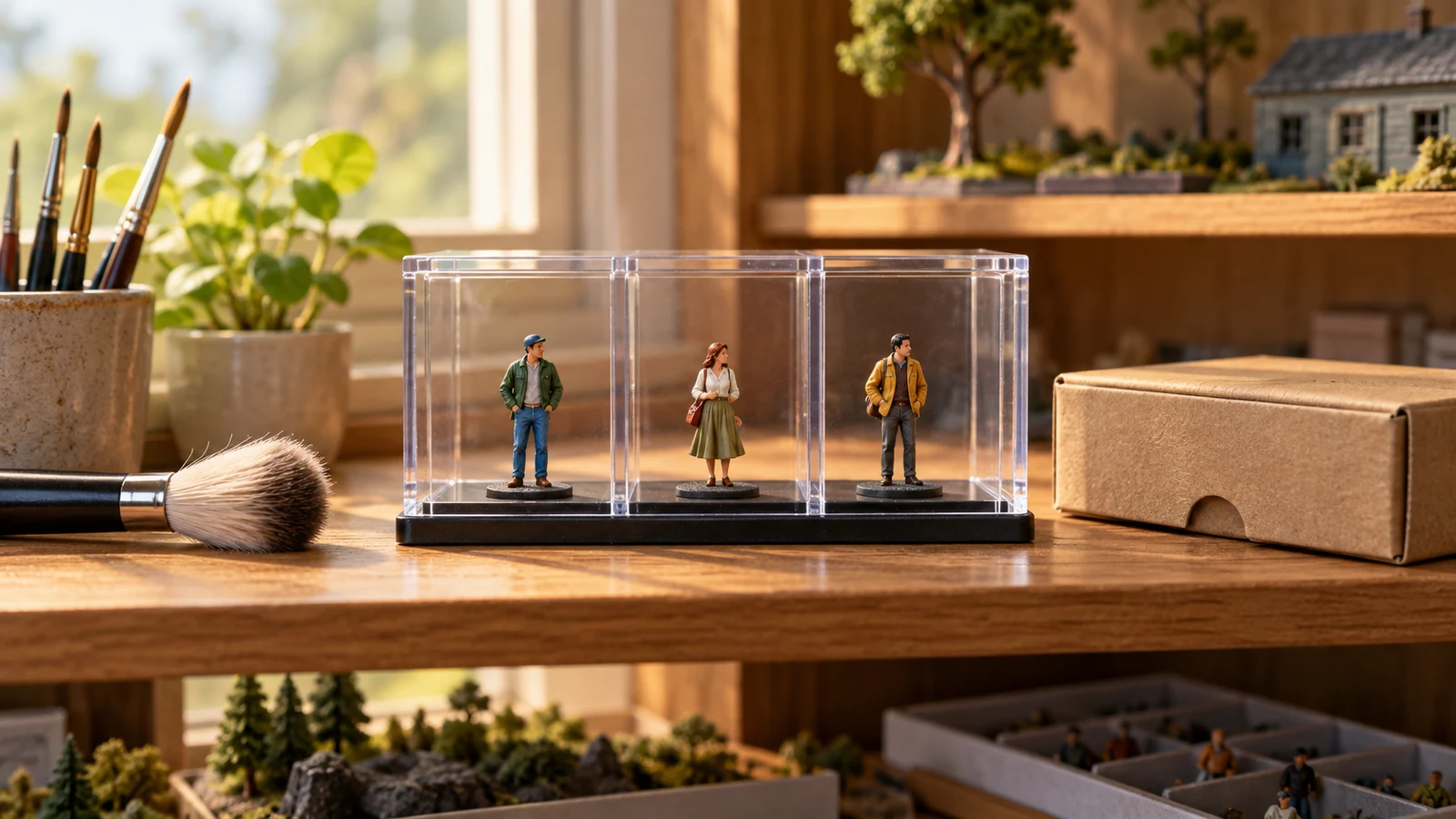
A closed display case in a dry room, away from direct sunlight, is a good starting point for a 1:64 figure. Leave room around each piece, handle it by the body or legs, and keep the original packaging for the next move.
Pick a display
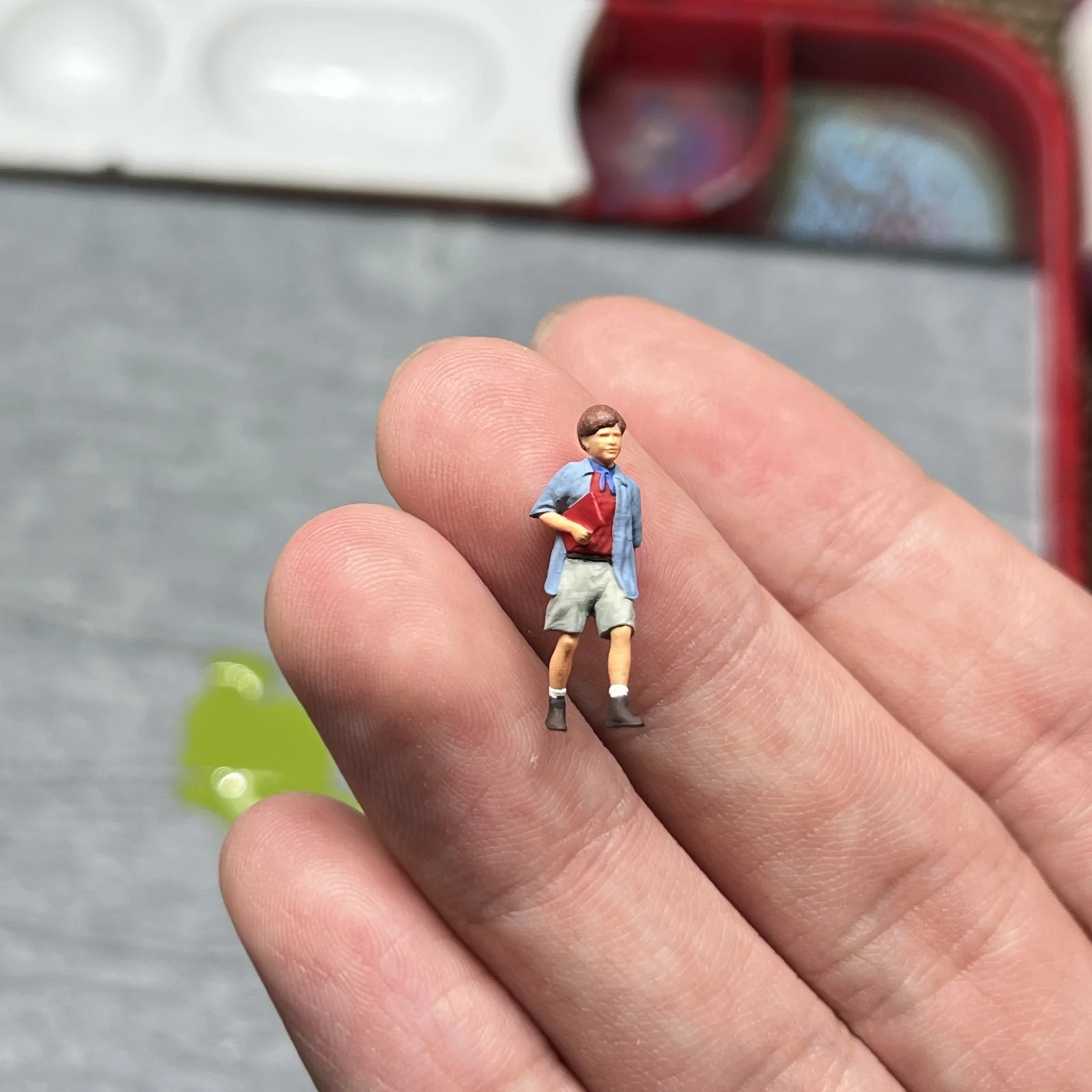
A clear acrylic box keeps dust off individual pieces and still lets you see them from several sides. Measure the figure, including any base or raised parts, before buying: a standing adult at this scale is often around 27 mm tall. Leave enough clearance to remove it without catching the top.
A shelf can hold more figures or a whole scene. Choose a level, stable shelf away from doors and edges where hands, pets or vibrations might knock it. A closed cabinet reduces cleaning; an open shelf makes rearranging easier but collects dust more quickly.
- Put heavier vehicles and scenery down before adding figures.
- Leave space between pieces so their delicate parts cannot touch.
- Test any removable mounting putty on an inconspicuous surface first; it can leave residue.
Control light, heat and damp
Keep the display out of direct sun and away from radiators and hot lamps. Avoid damp bathrooms, cellars and places with frequent condensation. If you use a sealed container, make sure the figure and container are completely dry first. Do not put desiccant loose against painted surfaces.
For dust, use a soft, dry brush and a blower bulb. See how to clean painted miniatures for the full steps. Never press a cloth into thin arms or accessories.
Pack for a move
Pack each figure separately instead of allowing pieces to knock together. Work over a folded towel and hold the figure by its body or legs.
- Remove loose scenery and detachable parts. Photograph the arrangement if you want to rebuild it.
- Place each figure in its own small compartment. Use soft, clean padding around the body, leaving delicate projections free from pressure.
- Close the inner box and put it inside a sturdier outer box with cushioning on every side. Label it fragile and keep it upright.
- At the destination, unpack one piece at a time over a soft surface. Check the contents before discarding padding.
Do not wrap adhesive tape directly around a painted figure, pack several figures loose in one bag, or leave the box in a hot car. For day-to-day handling, see figure care.